
Digital Tools 1
The capabilities of language structure
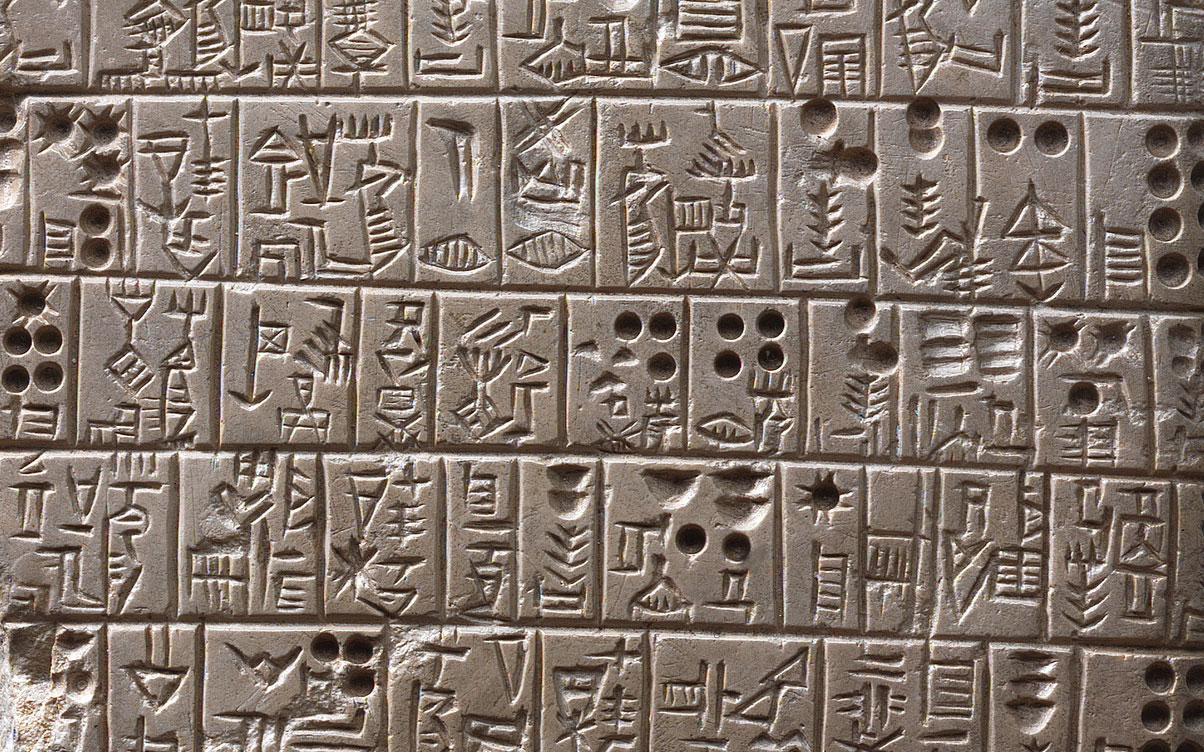
Greece’s greek and Mesopotamia’s cuneiform each had different fundamental capabilities, which caused major differences in what each society could do with literature. Mieroop first identifies that cuneiform is merged with various other languages, and concluded that “Thus there existed a large variety of potential readings and interpretations of every word and cuneiform sign.” (Mieroop 7). Cuneiform being such an amalgamation of languages, and lacking a fundamental alphabet, caused it to be difficult for a precise idea to be captured in writing. Not only that, but the history could be easily bent to fit whatever was needed in the present. The language of Greece however, eventually landed on a consistent alphabet, which was not as reserved to priestly and upper roles. Goody explains that with a consistent alphabet that was more publicly accessible, the past couldn’t be as easily bent to fit what the present needed to be. This started in Greece thoughts of questioning tradition, which began a harder drive for historical documentation and critical thinking past myths and into philosophical thought. The structure of a language therefore affects how accurate and interpretable a language is. A society that has an extremely interpretable language is much less precise in its history, making it easier to manipulate. This idea applied to computer languages, means that computer languages are incredibly accurate. This is because computer languages cannot involve interpretation. A computer language then sacrifices all interpretation for accuracy.
Here’s a link to “The Consequences of Literacy” by Goody, Jack