
Digital Tools 1
How Writing Systems Enable Us
The claim that alphabetic writing helped enable Greek philosophical thought suggests that different kinds of writing can be easier to teach, understand, and communicate than others. Goody and Watt argue that this alphabetic writing allows for easier analysis because it breaks language into small, repeatable units that can be reordered and compared. That flexibility makes it easier to build step-by-step arguments, formal definitions, and systematic categories, which are central to philosophy (Goody and Watt). When compared to a blockier and less easily structured format like cuneiform, an alphabet is much better for making and refining claims, making it a more efficient and effective tool for philosophical thought. This also paints knowledge as something concrete, to be debated and argued with. Van de Mieroop’s description of the Mesopotamian writing system portrayed a system where texts could be edited and revised, demonstrating that their knowledge was considered adaptable (Van de Mieroop). This presents two opposing perspectives on authorship; one consisting of stable line-by-line structures, and the other of fluid texts that were cumulative of multiple contributors.
Taken together, these comparisons point to the fact that writing systems are about more than just how thoughts are physically recorded. They show that writing systems can dictate the type of thought that can occur. As the previous examples show, an alphabetic system is useful for explicit argument, so it can be more helpful for philosophical thought, as it is believed to have done in Greece. A syllabic system like Mesopotamian cuneiform supports evolving ideas, which can still have meaning through tradition.
This has clear implications for computer languages. Programming languages are also structured symbol systems that make certain kinds of thinking easier and others harder. A simple computer language can allow for functions like step-by-step procedural instructions, and a more complicated language can allow for more abstract functions. Just like alphabetic writing lowered the barrier for testing and rearranging ideas, modern coding languages allow programmers to accomplish more in a more timely manner. Digital communication platforms go even further by making communication quick and easy, as well as much more accessible to the common person. This can also be compared to how an alphabetic system that was significantly easier to learn and spread to the common person. Thus, computer languages combine the formal precision of an alphabet with the adaptability of cuneiform practices in Mesopotamia, which can increase possibilities and change thought processes, just like the transition from syllabic systems to alphabetic systems did. In conclusion, the structure of the language shapes not just what we say, but the way we think and the things we are able to accomplish.
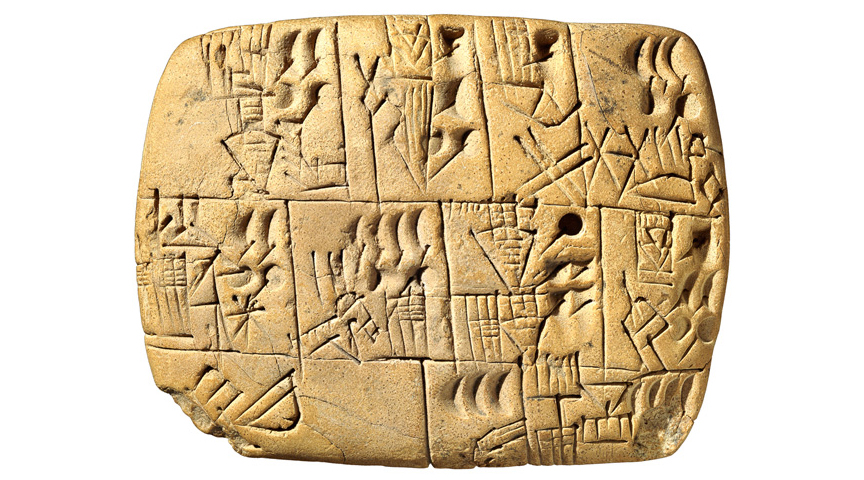
Learn more about the evolution of writing from syllabic to alphabetic systems here.