
Writing and Programming Languages
Writing and Programming Languages
The debate between Goody and Watt and Van De Mieroop is basically about whether your writing system determines what kind of thinking you can do. Goody and Watt say the Greek alphabet enabled philosophy because it made texts permanent and specific. Once Homer was written down, people could compare different versions and spot contradictions, which created the critical distance needed for philosophical thinking. In oral cultures, stories just adapt to fit current social needs, like genealogies that change when families die out. But alphabetic writing locks things in place so “succeeding generations were faced with old distinctions in sharply aggravated form” (Goody 321-322). Van De Mieroop pushes back by showing that Babylonians had sophisticated philosophy too, just different. Cuneiform signs have multiple meanings, and this wasn’t a limitation but actually enabled complex interpretive thinking. In the Enūma eliš, Marduk’s names break down into layered meanings that reveal cosmic truths. “Reality had to be read and interpreted as if it were a text” (Van De Mieroop 10). So where Greeks developed formal logic with fixed definitions, Babylonians developed relational philosophy based on reading multiple meanings.
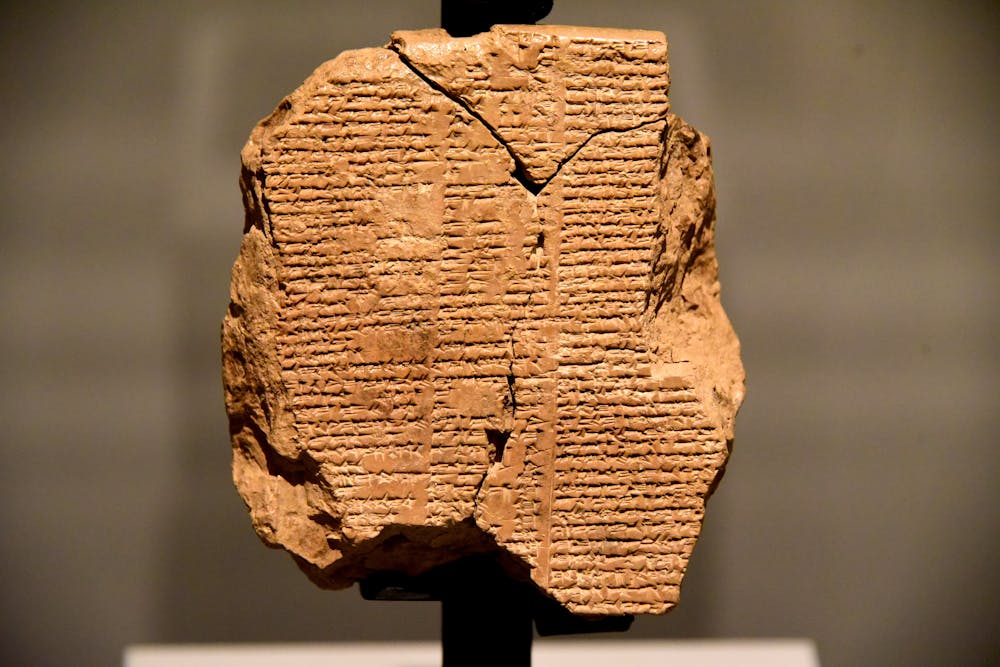
This matters for programming languages because they’re design them like alphabets, totally precise and unambiguous. But that precision limits what’s expressible, and it’s why AI struggles with natural language, which works more like cuneiform with context-dependent meanings. Because of this, I doubt AI will ever be able to replicate the human thought process. Also, open source development actually works like Babylonian texts where “no text was considered unalterable” (Van De Mieroop 26) and you have distributed authorship with creators, maintainers, and users all shaping what code means. Different writing systems enable different thinking, and neither is better. Sometimes we need alphabetic precision, sometimes we need cuneiform-style systems that handle complexity and multiple valid interpretations.