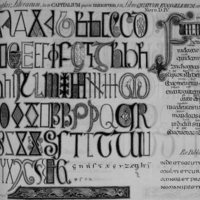
Writing in the Ancient World
Mesopotamian
Marc Van De Mieroop discusses how Mesopotamian civilization developed in different ways. Cuneiform started as a system for keeping records and managing society. The nature of cuneiform is that every sign has multiple meanings and can be interpreted in different ways, depending a lot on context. This makes cuneiform super useful for laws and trade while but less helpful for abstract thinking. Mesopotamian writing was more focused on managing resources.
Goody and Watt explain in the text that in oral cultures, people had to remember everything; knowledge depends on traditions and memory, keeping the ideas tied to social situations. The text states that anything you are writing down and saving for the future is something important and worth record-keeping. (Goody and Watt 311-332) A written record society is different because you write it down by making it permanent and easier to look at. It breaks words down into small sound units. Alphabetic writing helps people think clearly, make a logical argument, and compare their own ideas with others, which supported the rise of ancient Greece.
Historians argue that the way writing is structured affects how we as people think and communicate. In the same way that alphabetic writing helped develop logical thinking, while cuneiform focused more on record-keeping, computer languages shape how we as people are today, focusing on clear rules, and the structure and how social media is shared online.